Made in USA
Latex Mattress: The Complete Buyer’s Guide
Looking for the best latex mattress for durability, cooling, and comfort? This guide explains what latex mattresses are, the difference between Talalay and Dunlop, how to choose firmness and construction, who benefits most from latex, care and warranty considerations, and which FloBeds models are best for specific sleepers. Use the quick checklist and comparison table to pick the right latex mattress confidently.
What is a latex mattress?
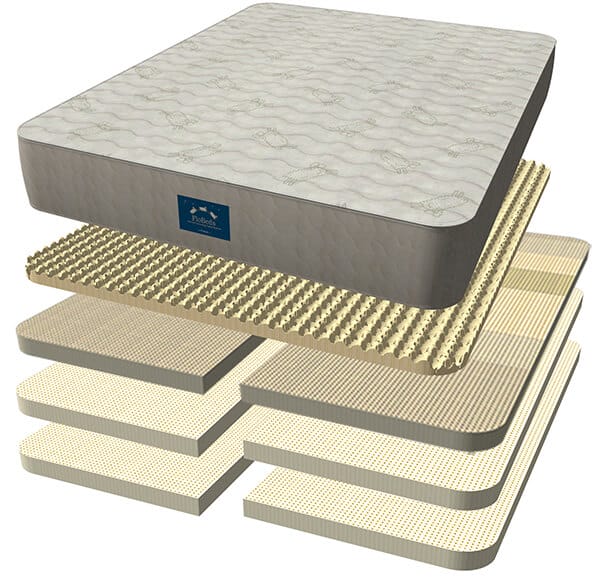
A latex mattress uses natural or synthetic latex foam as a primary comfort or support layer. Natural latex is derived from rubber tree sap and is processed into two common forms — Dunlop and Talalay — each with a distinct feel and performance profile. Latex is known for resilience, pressure relief, breathability, and a longer lifespan compared with many polyurethane foams.
How latex is made (brief)
- Dunlop: Latex sap is whipped, poured into a mold and vulcanized. It tends to be denser with a slightly stiffer feel.
- Talalay: The latex sap is partially vacuum-sealed and flash-frozen before curing, producing a more consistent cell structure and is conforms better to the body.
Both Talalay and Dunlop have advantages. Your choice depends on comfort preference, budget, and intended use.


Talalay vs Dunlop vs Blended — which should you choose?
| Type | Feel | Durability | Price | Best for |
|---|---|---|---|---|
| Talalay | More consistent, responsive | Excellent | Higher | Back and Side sleepers, those who want a pressure relief |
| Dunlop | Denser, stiffer | Good | High | Back sleepers, sleepers who want more rigid support, budget-conscious buyers |
| Blended/Synthetic | Varies | Depends on quality | Lower | Price-sensitive buyers |
Benefits and downsides of latex mattresses
Key benefits
- Durability: High-quality latex often lasts 10–20 years with proper care. FloBeds have a 20 year warranty.
- Pressure relief + responsiveness: Provides contouring without the “stuck” feeling common in slow memory foams.
- Natural cooling: Open-cell structure and often breathable covers help dissipate heat.
- Eco-options: Natural latex can be certified (GOLS or Oeko‑Tex) and paired with organic covers for healthy clean mattresses.
- Hypoallergenic potential: Latex resists dust mites and mold when properly protected and aired; note that natural rubber allergies are rare but possible.
Common downsides
- Weight: Latex mattresses are heavier and harder to move.
- Price: Natural Talalay or Dunlop is often costlier than polyfoam or innerspring hybrids.
- Initial off-gassing: Natural latex has minimal chemical smell, but blended/synthetic foams may off-gas.
- Firmness variability: Finding the perfect firmness may require trying different constructions or split firmness options for couples.
Who should buy a latex mattress?
Latex suits a broad set of sleepers but is particularly strong for:
- Back and combination sleepers who need responsive support.
- Hot sleepers who want a cooler mattress than dense memory foam.
- Couples who need a responsive surface and reduced motion transfer and in FloBeds case, personalized firmness for each sleeper.
- Buyers seeking long-lasting, eco-conscious mattress options.
How to choose: specifications that matter
Firmness (how to pick)
Firmness is subjective and usually measured on a 1–10 scale (1 very soft — 10 very firm). Use body weight + sleep position as a guide.
FloBeds offers a firmness advisor to help you select the right firmness.
- Side sleepers: 3–6 — softer options relieve shoulder and hip pressure. FloBeds vZone has adjustable shoulder, hip, and lumbar zones.
- Back sleepers: 4–7 — medium-firm for lumbar support with some contouring.
- Stomach sleepers: 6–8 — firmer feels help keep hips aligned.
- Combination sleepers: 4–7 — responsive latex helps change positions easily.

Thickness and layering
Look for a supportive base (6–8″ firm latex) with 2–4″ of latex comfort layers for pressure relief. Hybrids mix coils and latex to save cost.
ILD (Indentation Load Deflection)
Latex firmness is measured in ILD (Indention Load Deflection) — lower ILD is softer.
You can see the Latex Mattress ILD Chart on this page about Talalay and Dunlop latex.
Zoning and split options
Zoned latex provides firmer support where the body needs it (hips) and softer where it needs cushioning (shoulders). Split-firmness options are useful for couples with different firmness preferences. FloBeds makes a zoned layer that can be changed to suit your needs.
FloBeds latex mattress lineup — which model for you?
Every FloBeds cover is made with organic cotton quilted to organic wool for
vZone — Best for Side Sleepers (firmer bottom layers, adjustable hip, shoulder and lumbar zones)
Construction: 12″ Talalay Latex Mattress (each sleeper has two 3″ layers in the firmnesses they need, a 3″ adjustable zone layer built for their support needs; and a 2″ convoluted latex topper covers both sides and provides pressure relief and added breathability)
Deluxe — Best for Back Sleepers
Construction: 12″ Talalay Latex Mattress (each sleeper has three 3″ layers in the firmnesses they need; and a 2″ convoluted latex topper covers both sides and provides pressure relief and added breathability)
Big & Tall — Best for Hot Sleepers and Big & Tall (firmer bottom layers, adjustable hip, shoulder and lumbar zones)
Construction: 16″ Talalay Latex Mattress (each sleeper has three 3″ layers in the firmnesses they need, a 3″ adjustable zone layer built for their support needs, a cooling layer of horse hair; and a 2″ convoluted latex topper covers both sides and provides pressure relief and added breathability)
Select — Best for Budget Shoppers
Construction: 9″ Talalay Latex Mattress (each sleeper has two 3″ layers in the firmnesses they need; and a 2″ convoluted latex topper covers both sides and provides pressure relief and added breathability)
Comparison grid (quick)
- Best for Side Sleepers: vZone Mattress
- Best for Back Sleepers: Deluxe or vZone
- Best for Hot Sleepers: Big & Tall Mattress with Coir base and horsehair upper layer.
- Best Value: Select Mattress (durability + competitive price)
Buying tips and decision checklist
Before you buy, use this quick checklist:
- Confirm the latex type: Talalay (best); Dunlop (OK for lower layers, but limits adjustability, and costs less); blended (cheaper) and percentage of natural latex (look for 100% for health & durability) .
- Check certifications: Oeko‑Tex and organic/natural claims.
- Review firmness options and whether split-firmness is available for couples.
- Ask about trial period, return policy, warranty length and what it covers.
- Check whether a base/foundation/slatted platform is recommended.
- Read verified customer reviews and look for aggregateRating schema on the product page.
Check out FloBeds reviews gathered by a 3rd party.
Care, maintenance, and longevity
Latex mattresses last when cared for correctly:
See FloBeds Latex Mattress Care instructions
- Use a breathable mattress protector to prevent stains while preserving airflow.
- Keep out of direct sunlight.
- Follow manufacturer cleaning instructions — spot clean only; avoid harsh chemicals.
Typical lifespan: 10–20 years for quality latex; warranty terms vary — check your model’s specific policy.
Certifications, allergies, and safety
Certifications to look for:
See our certification
- GOTS/Oeko‑Tex: for organic textiles and low chemical residues in covers/fabrics.
- OEKO‑TEX Standard 100: tests for harmful substances in fabrics.
Allergy note: true latex (natural rubber) allergy is uncommon in mattress contexts because the latex is vulcanized and not in direct skin-contact with most covers, but people with severe latex allergies should consult a physician and mattress manufacturer for specifics.
Price vs. value: what to expect
Latex mattresses tend to cost more upfront than basic polyfoam models but often offer better longevity and total cost of ownership. Consider long-term value if you plan to keep a mattress for 8–15+ years.
Frequently Asked Questions
What is a latex mattress?
A latex mattress uses natural or synthetic latex foam in comfort layers, providing responsive support, pressure relief, and long-term durability.
What’s the difference between Talalay and Dunlop latex?
Dunlop is denser and stiffer, while Talalay is more consistent and conforms better to the body’s natural curves. Talalay often costs more and is preferred for comfort and pressure relief. See more about Talalay at the producer website: Talalay Global
Are latex mattresses good for side sleepers?
Yes — especially Talalay and designs that relieve shoulder and hip pressure while maintaining support for the spine.
Do latex mattresses sleep hot?
Latex is more breathable than dense memory foam and, when combined with a breathable covers, can sleep relatively cool. A layer of wool or horse hair adds enhanced air flow.
Can you be allergic to latex mattresses?
True latex allergy is rare for mattresses; if you have a severe latex allergy, consult your doctor and look for manufacturer allergy statements or synthetic alternatives.
How long does a latex mattress last?
High-quality latex mattresses commonly last 10–20 years, depending on construction, care, and usage.
How do I choose the right firmness?
Match firmness to sleep position and body weight: side sleepers generally prefer softer, back/stomach sleepers firmer; consider zoning or split options for couples. Try the FloBeds Firmness Advisor. It can be found in the top right corner of the latex mattress page. Look for
Can a latex topper soften a mattress that’s too firm?
Yes. A latex mattress topper adds a layer of natural Talalay on top of the bed you already have, softening a firm mattress and easing pressure on shoulders and hips. FloBeds toppers come in 2″ convoluted, 3″ solid or shredded latex, with an optional organic cotton cover.
Can I use a latex mattress on an adjustable base?
Many latex mattresses work well with adjustable bases — check manufacturer specs, but latex’s flexibility often pairs nicely with adjustable frames. FloBeds work great on an adjustable base.
What is FloBeds’ return policy and warranty for latex mattresses?
All FloBeds mattresses come with a 20 year warranty AND a Goldilocks Guarantee (change your firmness over the 30 year life of the mattrress.
How do I care for and clean a latex mattress?
Rotate regularly, use a breathable protector, spot-clean stains per manufacturer directions, and avoid liquids soaking into layers. See product care page
Buying checklist — final quick steps
- Read the model profiles and pick one matching your sleep position and firmness needs.
- Confirm manufacturer warranty/returns.
- Check shipping, setup, and whether a foundation is required.
- Buy with a protector and follow the care tips to maximize lifespan.
Ready to shop? See our latex mattress collection and compare models based on firmness, certification, and sleep type: Shop natural latex mattresses at FloBeds.